The architecture of safety
Oscar Newman found that crime often comes from spatial design, not people. Why "eyes on the street" matter, and how Amsterdam's Bijlmermeer proved it.
#002
Observation
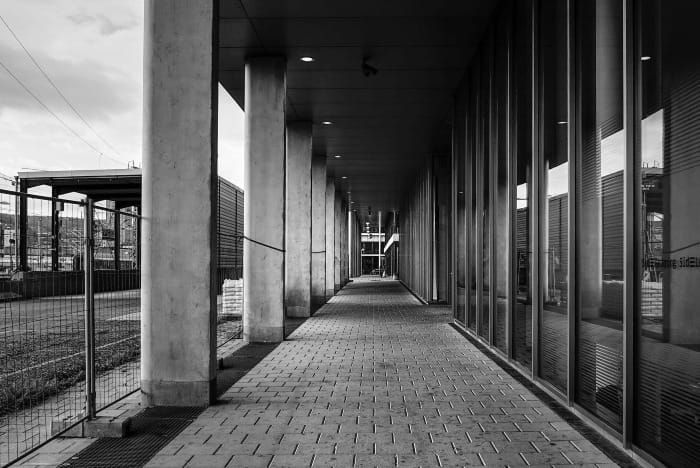
Urban environments often evoke visceral reactions, some streets feel inherently safe, whil others feel unsettling. In the 1970s, architect Oscar Newman observed a puzzling phenomenon: specific housing projects experienced significantly higher crime rates than others, even when the demographics of the residents were nearly identical. This observation suggested that the root of the problem was not the people themselves, but the physical environment they inhabited.
Interpretation
Newman’s interpretation of this data led to the concept of defensible space. He realized that crime is frequently a byproduct of poor spatial design. When an area feels anonymous, no one feels a sense of ownership or responsibility for it. Conversely, people are naturally inclined to protect spaces they feel "belong" to someone. In short, anonymity invites criminal activity, while clear spatial identity discourages it.
Pattern
According to the source, a safe and defensible environment must pass three specific tests:
- Clear Boundaries: There must be a legible distinction between private, semi-private, and public zones.
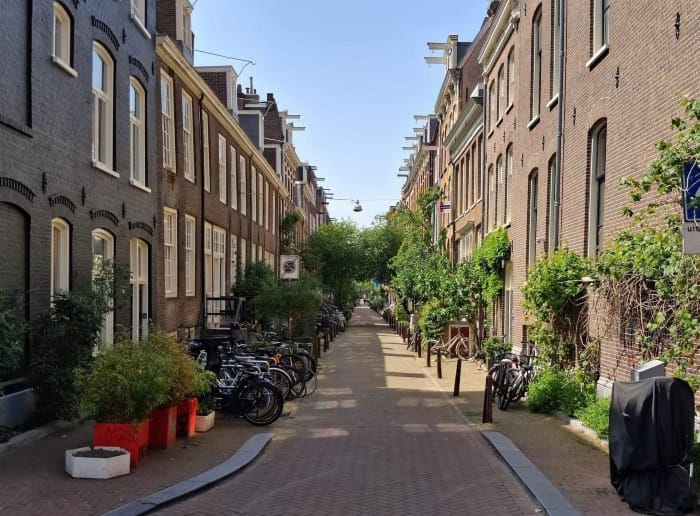
- Visibility ("Eyes on the Street"): The design must allow people to see the space. Features like windows and balconies facing the street create what urbanist Jane Jacobs famously called "eyes on the street".
- Invitation to Stay: Safe spaces are active spaces. A street is most secure not when it is monitored by cameras, but when it is populated by people who are staying and lingering, providing natural, informal surveillance.
Question
Can Social Control Replace Technology?
This concept prompts a critical question for modern urban planning: To what extent can we reduce our reliance on technological surveillance by designing cities that foster natural social control and a shared sense of responsibility among residents?
Example
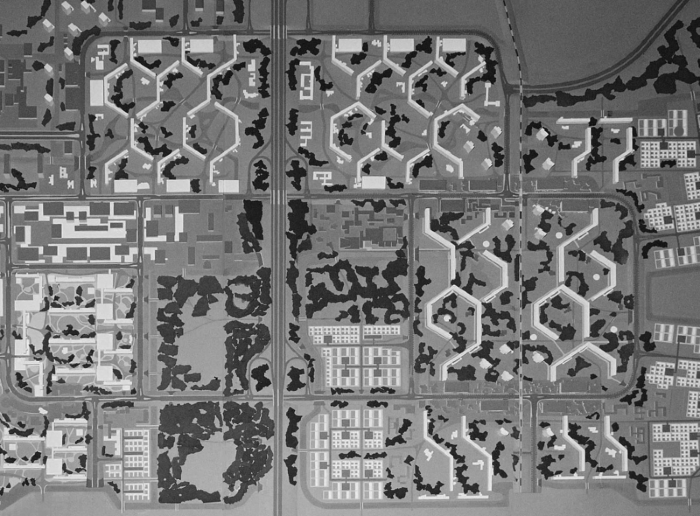
A prominent example of these principles in action is the redevelopment of the Bijlmermeer neighborhood in Amsterdam. Originally designed with anonymous high-rises and separated pedestrian walkways that lacked "eyes on the street," the area struggled with high crime rates. The subsequent revitalization replaced many of these structures with low-rise housing, clear private-public boundaries, and street-facing front doors. This shift mirrored Newman’s philosophy, successfully transforming anonymous voids into "defensible spaces" where residents feel a greater sense of ownership and safety.