The town that put people in the middle
In Houten, cars stay on the outer ring while bikes and people take the center. Why this fifty-year-old Dutch layout still outperforms new car-first towns.
#007
Observation
Houten doesn't feel radical if you grew up in the Netherlands. It just feels like someone actually finished the job most Dutch towns only half commit to. Cars sit on the outside. People and bikes take the middle. That's it. That's the whole trick, and it works better than almost anywhere else that's tried it.
Interpretation
Most towns that call themselves bike-friendly just bolted a cycle lane onto a car-first layout and called it done. Houten flipped the actual hierarchy. Cars get pushed to the ring road. Everyone else gets the center. That's not a cosmetic difference, it changes how loud the streets are, how far kids are allowed to wander alone, how often neighbors actually run into each other.
Pattern
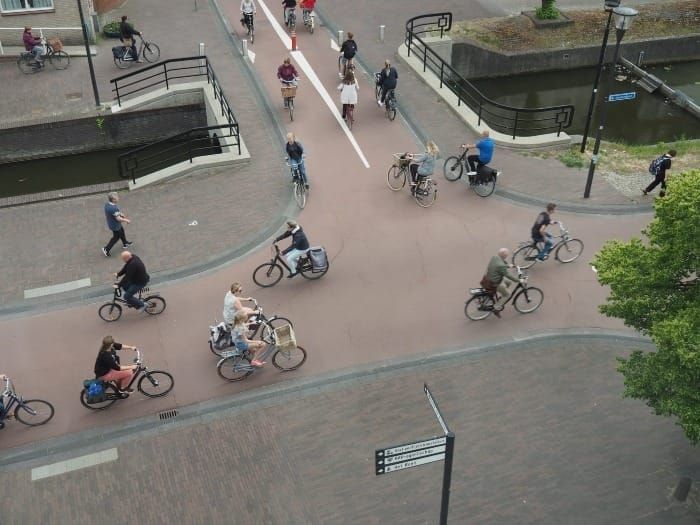
In the 1970s, the people living there looked at what car-first planning had already done to towns nearby through the '50s and '60s and refused to repeat it. They wanted Houten to keep growing without turning into another town built around parking and through-traffic. So cars became the guest, kept to the outer ring, never allowed into the core, while a dense grid of bike paths and footpaths carries everything else. Toddlers, teenagers, people well past retirement, all sharing the same paths, and actually stopping to talk to each other while they're on them.
Question
To what extent is the radical "Houten model" of car-light, bicycle-centric design still fully integrated into contemporary Dutch urban planning, and how do modern constraints, such as dense inner-city redevelopment and strict Environment Act regulations, compromise these original urban design ideals during final execution?
Example
You can see this blueprint clearly at Houten Station. If you walk out of the station, you are immediately dropped into a lively, pedestrianized town center entirely free from cars, traffic noise, and exhaust fumes. To cross from the northern half of the town to the southern half, a driver is forced to exit the neighborhood, join the outer ring road (Rondweg), and drive all the way around the perimeter before re-entering. Meanwhile, a cyclist or pedestrian simply glides straight through the center via the main bicycle backbone (Fietspad), completing the exact same journey in a fraction of the time.
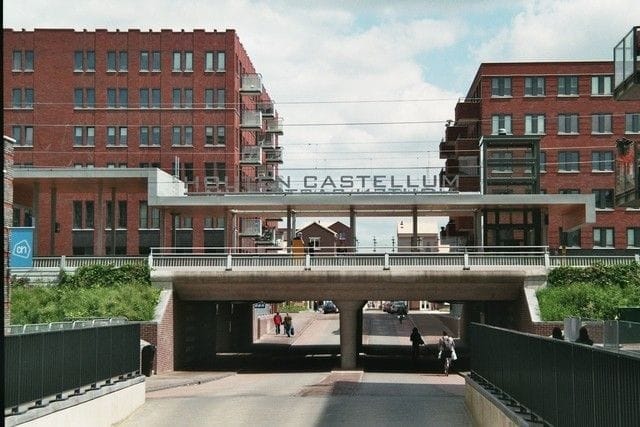
Houten was never built to impress anyone visiting. It was built for the people staying, which is probably exactly why it still works fifty years later.