This looks like it could be anywhere
Cities and shopping streets across Europe are starting to look identical. Why vernacular design still matters, and what Amsterdam's brick actually gets right.
#003
Observation
Walk through a modern commercial district today and you might feel a strange sense of déjà vu. Whether you're in a suburb outside Dallas or a new development outside Rotterdam, a lot of these places look strikingly identical. Urban planner Edward Relph gave this a name decades ago: "placelessness": the feeling that a location could be anywhere because it has no unique identity of its own.
Interpretation
Instead of boring architecture, this is about a missing sense of place. Cities love to brag about being "walkable," but walkable and memorable are two different things. A real sense of place shows up when the details of an environment, the colors, the textures, the materials in the ground beneath your feet, are a direct response to where that place actually is.
Pattern
The clearest example of this is vernacular architecture: building with what the local environment gives you. The Greek islands paint everything white because it reflects the brutal Mediterranean sun. Brooklyn's brownstones exist because that particular stone sat in nearby quarries and could be shipped down the Hudson cheaply. Neither choice was decorative first. Both were practical, and the look came later, as a side effect.
Question
So why, with global supply chains and standardized building materials, do we keep choosing the generic option over the one detail that would actually make a place feel like itself?
Example
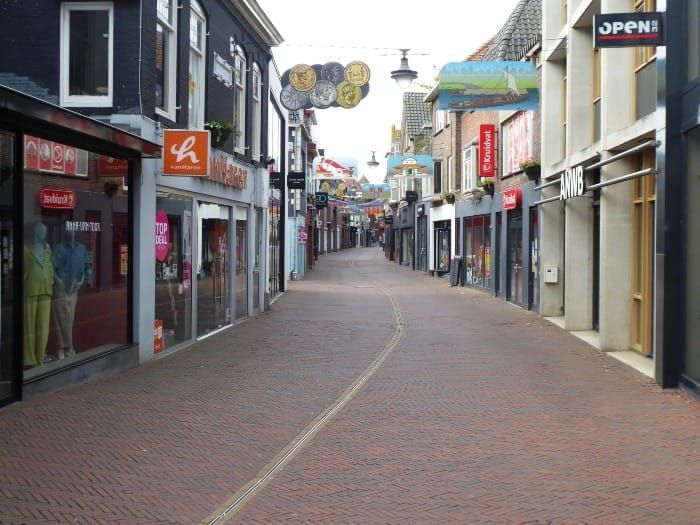
The Netherlands is a good case study because the country never had much stone to work with. What it had was clay, in huge quantities. So the Dutch built with brick: houses, streets, everything. Walk through Amsterdam and the brick underfoot isn't a design choice someone made for atmosphere. It's the landscape talking. That's why it reads as so unmistakably Dutch: the material had nowhere else to come from.
And it's not just buildings, retail is going through the same thing
The same flattening is happening to shopping streets, and in Europe it's arguably worse than the architecture problem. Walk down a main shopping street in Utrecht, then one in Lyon, then one in Leipzig, and you'll pass the same twelve or fifteen retail brands in roughly the same storefronts with the same lighting. City centers that used to have a distinct rhythm of local shops now run on the same international chains, the same glass-and-signage formula, the same generic café concepts. The Dutch even have a word for this flattening effect: "eenheidsworst", literally "unity sausage," meaning everything's been ground down into the same bland mix. High rents push out independent retailers first, and chains that can afford the rent tend to look the same everywhere by design, since consistency is the whole point of a chain. The result is a shopping street with no vernacular left in it at all: no clay, no local stone, no regional response, just the same formula, repeated in a different postcode. It's placelessness applied to commerce instead of buildings, and it moves faster, because a storefront can be swapped out far quicker than a building can be torn down.